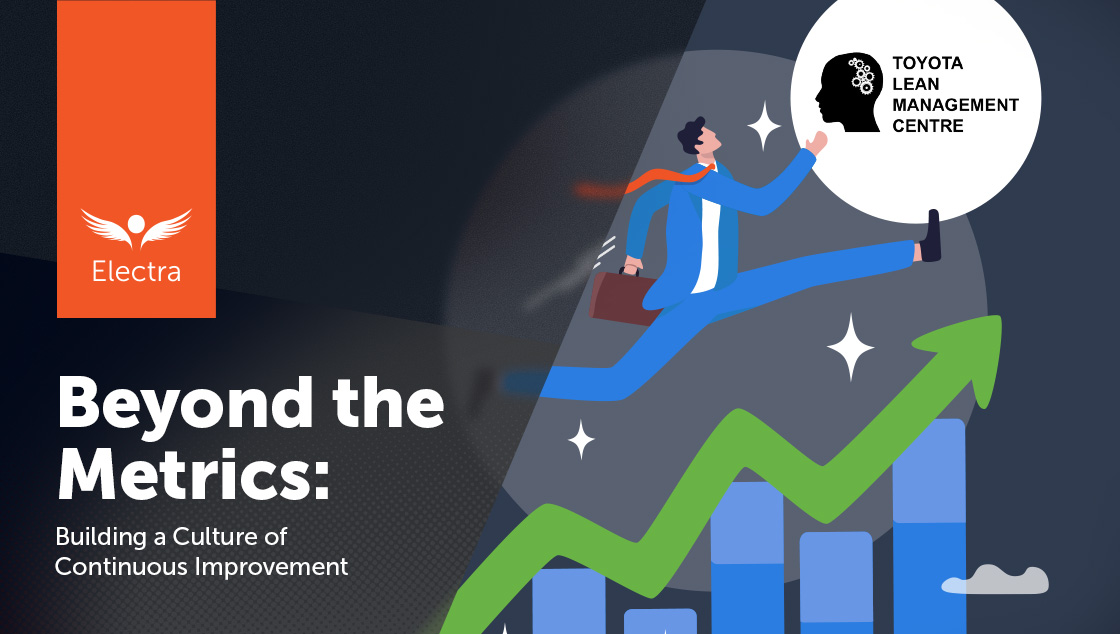
Metrics are essential in Lean. They help organisations track progress, identify issues, and measure the impact of improvements. But metrics alone do not create transformation. Toyota’s philosophy makes this clear. The Toyota Way emphasises continuous improvement and respect for people, not just performance indicators. The goal is to build a culture where everyone contributes to better ways of working, every day.
Electra Learning’s change management experience shows that organisations often focus heavily on KPIs during Lean adoption but overlook the cultural enablers that make improvement sustainable. Psychological safety is the first of these enablers. Teams need to feel safe to speak up, raise issues, and suggest improvements. Leaders who listen without blame, encourage experimentation, and treat mistakes as learning opportunities create an environment where improvement can flourish.
Team-led problem solving is another cornerstone of sustainable Lean. Lean is most powerful when teams work together to understand issues and develop solutions. Visual management, short problem-solving sessions, and cross functional collaboration help teams take ownership of their processes and outcomes. When teams feel empowered to act on their insights, improvement becomes part of the rhythm of daily work.
Leader-led learning also plays a vital role. Leaders who ask reflective questions, participate in learning cycles, and model curiosity set the tone for continuous improvement. Embedding Kaizen into daily work is essential for long term success. Kaizen is not an event but a way of thinking. Organisations that encourage small, frequent improvements and make progress visible create a culture where improvement becomes self-sustaining.
Finally, metrics must be connected to meaning. Data should support learning rather than pressure. When teams understand what the data is telling them and how it links to purpose, metrics become motivating rather than overwhelming. This shift helps organisations move from compliance driven reporting to genuine continuous improvement.
Key Points for Continuous Improvement
- Culture, not metrics alone, determines whether improvement is sustained.
- Psychological safety enables teams to speak up and contribute ideas.
- Team led problem solving embeds Lean thinking into daily work.
- Leaders who model learning behaviours set the tone for improvement.
- Kaizen thrives when small improvements are encouraged and visible.
- Data becomes motivating when used for learning rather than pressure.
Toyota provides the principles, tools, and hands on learning that bring Lean to life. Electra Learning helps organisations embed the behaviours and cultural practices that sustain improvement over time. Together, they help organisations build a culture where continuous improvement is not a target but a way of working, thinking, and leading.
References and further reading
Electra Learning Articles
- Electra Learning. Sustaining Knowledge: From a Moment to a Movement. https://www.electralearning.com/sustaining-knowledge-from-a-moment-to-a-movement/
- Electra Learning. Train for Success: How to Make Learning Stick. https://www.electralearning.com/train-for-success/
- Electra Learning. Engage: Turning Resistance Into Results. https://www.electralearning.com/engage-turning-resistance-into-results/
- Electra Learning. The Hidden Cost of Poorly Managed Change. https://www.electralearning.com/the-hidden-cost/
Toyota Lean Management Centre
- Toyota Lean Management Centre. The Toyota Way and Continuous Improvement. https://tlmc.toyotauk.com/
Toyota Lean Management Centre. Our Courses. https://tlmc.toyotauk.com/collections/our-courses